What to Do When Your Kid Comes Out as Trans: A Guide for Parents and Caregivers

Your child just told you they're transgender. What happens next?
Whether you saw this conversation coming or it caught you completely by surprise, learning that your child is transgender, nonbinary, or otherwise gender diverse can bring up a lot of questions. You might feel supportive and excited that your child trusts you enough to share this part of themselves. You might feel confused, worried about their safety, or unsure of what to say. You may even experience several of these feelings at once.
That's okay. You don't need to have every answer right now.
What matters most is how you respond, how you continue to show up for your child, and whether they know they can count on you for love, respect, and support.
At Trans Affirm, we believe that every transgender and gender diverse person deserves to feel safe, respected, and supported in their identity. For young people, having that support at home can make an especially meaningful difference.
This guide is intended to help parents, guardians, caregivers, and other loved ones navigate those first conversations, understand what support can look like, and find resources to continue learning.
1. Start by Thanking Your Child for Trusting You
Coming out can be a vulnerable experience. Even when a child has a loving relationship with their parents, they may still worry about how their family will react.
Your child may have spent months or years thinking about their gender before deciding to tell you. Others may only recently have found the language to describe how they feel.
Regardless of their journey, sharing this information with you is an important moment.
One of the most meaningful things you can do is thank them for trusting you.
You might say:
"Thank you for telling me. I love you, and that isn't going to change."
"I'm glad you felt comfortable sharing this with me."
"I might have some things to learn, but I want to support you."
"Is there anything you'd like me to know or do differently?"
"You don't have to explain everything right now. I'm here whenever you want to talk."
You do not need to fully understand someone's gender identity to respect it.
Try to avoid making your initial response about your own fears, confusion, or expectations. While those feelings may deserve attention, your child should not have to manage your emotional response while sharing something personal about themselves.
You can process your feelings with another trusted adult, an affirming support group, or a qualified mental health professional while continuing to show your child love and respect.
2. Respect Their Name, Pronouns, and Identity
One of the simplest and most impactful ways to support a transgender child is to use the name, pronouns, and gendered terms they ask you to use.
For example, your child may ask you to use a different name, switch from she/her to he/him pronouns, use they/them pronouns, or refer to them as your child rather than your son or daughter.
Some transgender people continue using their birth name. Others choose a different name. Some use multiple pronoun sets, and some prefer no pronouns at all.
For some parents, adjusting to a new name can be particularly difficult. After all, you may have spent months choosing the name you gave your child, attaching memories, meaning, and love to it. It's understandable to have an emotional connection to that name, and it may take time to adjust to hearing and using a different one.
However, your child's decision to use a different name is not a rejection of you, your love, or the thought you put into naming them. It's an opportunity for them to express who they are and what feels right to them.
As parents, part of raising children is recognizing that they are their own people. They will develop identities, interests, beliefs, and preferences that may differ from what you originally imagined for them. Choosing a name that better reflects their identity can be part of that process.
Try not to take these changes personally or make your child feel guilty for them. You can acknowledge your own emotions without placing the responsibility for managing those feelings on your child. Ultimately, their name is something they will carry throughout their life, and they deserve to feel comfortable with it.
There is no single way to be transgender, and your child's preferences should guide how you refer to them. Respecting those preferences is one way to show that you love and support them as their own person, not just as the person you once imagined they would become.
What if you accidentally use the wrong name or pronouns?
Mistakes can happen, particularly when you're adjusting to a change in language you've used for years.
What matters is how you handle those mistakes.
If you accidentally use the wrong pronoun, briefly correct yourself and continue the conversation.
For example:
"I was talking to him yesterday. Sorry, I meant her. She was telling me about school."
There's usually no need for a lengthy apology or an explanation of how difficult the adjustment has been for you. Doing so can unintentionally put your child in a position where they feel responsible for comforting you.
If your child corrects you, listen, acknowledge it, and make the adjustment.
Practice makes a difference
If you're having difficulty remembering a new name or pronoun set, practice when your child isn't around.
You can say sentences aloud, think about your child using their correct name, or practice with someone who already knows about their identity and has permission to discuss it.
This allows you to build new habits without making your child experience repeated mistakes.
Being consistently misgendered or called a name someone no longer uses, sometimes called a deadname, can be distressing and may contribute to gender dysphoria for some transgender people.
Effort matters, but consistent effort should lead to meaningful improvement. Your child deserves to see that respecting their identity is important to you.
3. Ask How They Want to Be Supported
It's natural to want to immediately do something to help your child. However, the best place to start is by asking what support actually looks like to them.
Every transgender person has different needs, preferences, and experiences.
Some children may be ready to make changes to their appearance or how others refer to them. Others may want time to explore their identity privately.
You might ask:
"Would you like me to use your name and pronouns at home?"
"Do you want me to help correct other people if they use the wrong name or pronouns?"
"Would you like help finding clothes or a hairstyle that feels more comfortable?"
"Are there people you want to tell, or people you aren't ready to tell yet?"
"Would you like help finding other transgender people your age or a supportive community?"
"Is there anything I've been doing that makes you uncomfortable or that you'd like me to change?"
Remember that your child's answers may change over time.
They may feel comfortable with certain changes at home but not at school. They might want you to help communicate with relatives, or they may prefer to handle those conversations themselves.
Supporting your child doesn't mean making every decision for them. It means helping them feel heard, respected, and involved in decisions affecting their life.
What are possible next steps for transitioning?
When your child comes out as transgender, you might wonder what happens next. Does this mean they'll want to change their appearance? Take hormones? Have surgery?
The answer is different for everyone. Transitioning simply refers to the changes someone may make to feel more comfortable living as their gender. Not every transgender person transitions in the same way, and some don't feel the need to make many changes at all.
There are generally two types of transitioning that you may hear about:
Social transition: Changes to how someone expresses themselves or is recognized by others. This might include using a different name or pronouns, getting a new haircut, wearing different clothing, or using gender affirming items like chest binders or tucking underwear.
Medical transition: Healthcare that some transgender people may choose to pursue. This can include puberty blockers, which temporarily pause certain changes associated with puberty, or hormone therapy, such as testosterone or estrogen, which can help develop physical characteristics that better align with someone's gender. Some adults may also pursue gender affirming surgeries.
Not every transgender person wants medical care, and coming out doesn't automatically mean your child is asking for hormones or surgery. The best thing you can do is ask what they're interested in, listen to their needs, and avoid making assumptions.
What About Gender Affirming Healthcare in Idaho?
If you live in Idaho, it's important to understand that state law currently restricts certain types of gender affirming medical care for people under 18.
Under Idaho Code § 18-1506C, healthcare providers are prohibited from providing certain treatments to minors for gender affirming purposes, including:
Puberty blockers: Medications that pause certain changes associated with puberty, giving young people additional time before those changes progress.
Hormone therapy: Medications such as testosterone or estrogen that can change physical characteristics over time.
Certain gender affirming surgeries: Surgical procedures intended to change physical characteristics as part of someone's transition.
These restrictions apply to specific medical purposes and do not mean that your child is prohibited from expressing their gender, changing their name or pronouns socially, wearing gender affirming clothing, or receiving general healthcare and mental health support.
Families who want to explore medical care outside Idaho may be able to find assistance through organizations such as the Trans Youth Emergency Project. This program helps eligible families navigate access to care in states where it is legally available and may provide financial assistance for travel.
Because laws and healthcare availability can change, families should consult qualified healthcare professionals and trusted legal resources, such as the ACLU of Idaho, when exploring their options.
What Is Transition Wear, and How Can You Help?
Transition wear refers to clothing and other items that can help someone feel more comfortable with their body or gender expression. Some common examples include:
Chest binders: Specially designed garments that compress the chest to create a flatter appearance.
Tucking underwear: Underwear designed to help create a smoother appearance around the groin.
Trans tape: Body safe adhesive tape designed for certain forms of chest binding.
Packers: Items worn in underwear to create the appearance of a bulge.
(Check out our Binder sizing How-to or Tucking How-to)
Not everyone uses these items, and your child may only be interested in one or two, or none at all.
At Trans Affirm, we provide free or donation based transition wear at our in person events across Idaho, depending on available inventory. We also offer education and guidance on safer binding, tucking, and using transition wear, including proper sizing, precautions, and how to reduce the risk of discomfort or injury.
If your child is interested in trying transition wear, learning about these items together can be a great way to show support. It's important to understand that some items, particularly binders and tape, can cause injury if used incorrectly. Follow appropriate safety guidance, and seek professional advice when needed.
Remember, transitioning doesn't have to happen all at once, and your child doesn't need to have a complete plan. Their interests and needs may change as they grow.
Your role isn't to decide what their transition should look like. It's to listen, help them explore safe and appropriate options, and make sure they know they have your support along the way.
4. Respect Their Privacy and Never Out Them Without Permission
Coming out to one person does not automatically mean someone is ready to come out to everyone.
Your child may feel safe sharing their gender identity with you while still feeling uncertain about telling extended family, teachers, friends, or other people in their life.
Your child should have a meaningful say in who knows about their gender identity and when that information is shared.
Before discussing their identity with anyone else, ask for their permission.
This includes grandparents and other relatives, family friends, school staff, medical professionals, and even people you believe will be supportive.
You might ask:
"Who knows about your identity right now, and who are you comfortable with me talking to about it?"
It's also important to discuss which name and pronouns they want you to use in different environments.
For example, your child may want you to use their chosen name at home but their previous name around relatives who do not yet know they're transgender.
This does not make their identity any less valid. It may simply reflect where they currently feel safe or comfortable.
There may be situations involving safety, medical care, or legal obligations where sharing certain information requires additional consideration. When possible, explain those circumstances to your child, involve them in the conversation, and share only what is necessary.
Protecting your child's privacy is one way to demonstrate that you respect their autonomy and trust.
5. Listen More Than You Question
It's understandable to have questions when your child comes out.
You might wonder how long they've felt this way, what being transgender means to them, whether they're certain, or what their future might look like.
Curiosity isn't inherently harmful. However, asking too many questions at once can make your child feel interrogated or pressured to justify their identity.
Questions such as "Are you sure?", "How do you know?", or "Is this just a phase?" may communicate doubt, even when that isn't your intention.
Instead, give your child opportunities to share their experiences at their own pace.
You can say:
"I'd love to understand more about what this means to you, but you don't have to explain anything you're not comfortable sharing."
If they want to talk, listen without interrupting or immediately trying to solve everything.
If they don't want to talk, respect that boundary.
Some transgender people experience gender dysphoria, which can involve distress related to their body or how others perceive their gender. Others primarily describe gender euphoria, the happiness or comfort they experience when their gender is recognized or affirmed.
Some experience both, and some experience neither in a significant way.
Your child does not need to experience dysphoria, dislike their body, or have known their gender from early childhood for their identity to deserve respect.
Their experience is their own, and they should not have to prove it to you.
6. Educate Yourself Without Making Your Child Your Only Teacher
Your child may be exploring their identity while you're learning about transgender experiences for the first time.
While it can be valuable to learn from your child, they should not have to carry the responsibility of educating you about an entire community.
Transgender and gender diverse people have a wide variety of identities, experiences, and perspectives. No single person can represent everyone.
Look for educational resources developed by transgender advocates, reputable LGBTQ+ organizations, and qualified professionals with experience supporting transgender young people.
Some helpful topics to explore include:
The differences between gender identity, gender expression, and sexual orientation.
What transgender, nonbinary, and gender diverse mean.
How to use different pronouns respectfully.
What gender dysphoria and gender euphoria are.
How social transition and medical transition differ.
How to support transgender youth in schools, healthcare settings, and family relationships.
How discrimination, bullying, and lack of acceptance can affect young people's well-being.
It's also important to recognize that gender identity and sexual orientation are different things. A child coming out as transgender does not automatically tell you anything about who they are romantically or sexually attracted to.
As you learn, prioritize information that reflects the diversity of transgender experiences rather than stereotypes or assumptions.
Many of these topics can be found on this very website on our Education page <3
7. Understand That Transition Looks Different for Everyone
One of the most common misconceptions about being transgender is that every transgender person follows the same path of transitioning.
In reality, there is no universal transition experience.
Some transgender people socially transition by changing their name, pronouns, clothing, hairstyle, or how they introduce themselves to others.
Others may pursue medical care related to their gender when it is appropriate, desired, and available to them.
Some people do both. Others do neither.
For children and teenagers, transition related decisions should be approached with consideration for their individual needs, age, development, health, and circumstances.
Social transition
Social transition can include things like using a different name, wearing clothing that feels more affirming, changing a hairstyle, or being recognized differently at home or school.
For many young people, these changes can provide opportunities to explore what feels comfortable and authentic.
Parents can support this process by listening, communicating, and helping their child make choices appropriate to their circumstances.
Medical transition
Not every transgender person wants or needs medical interventions.
For young people who have questions about gender affirming healthcare, decisions should be made through individualized conversations with qualified healthcare professionals, the young person, and their parent or guardian as appropriate.
Medical options, eligibility, and legal restrictions vary by age, location, and individual circumstances.
Coming out as transgender does not automatically mean your child wants hormones, surgery, or any particular medical treatment.
Avoid assuming what your child wants or rushing conversations about medical decisions before they are ready.
The goal is to understand their needs and help them access accurate information and appropriate professional guidance.
Check out this blog to understand more of the differences of transition types
8. Help Them Feel Safe and Affirmed at Home
Your home should be a place where your child can feel respected and supported.
This doesn't require expensive purchases, major changes, or having everything figured out immediately.
Sometimes support looks like using the right name at dinner, standing up for your child when someone makes an inappropriate comment, or allowing them to express themselves without criticism.
Other times, it may involve more active advocacy.
For example, you might work with your child to address bullying at school, communicate their needs to trusted educators, help them find affirming healthcare professionals, or establish boundaries with relatives who refuse to respect their identity.
Supporting your child around unsupportive relatives
Family gatherings can be especially complicated when not everyone shares the same level of understanding or acceptance.
Your child should not be expected to tolerate disrespect simply because someone is a family member.
Talk with them ahead of time about what would help them feel comfortable and safe.
You may need to establish boundaries around inappropriate questions, deliberate misgendering, or disrespectful comments.
You can also make a plan together for leaving an uncomfortable situation or checking in privately if they need support.
Don't make their identity the center of every interaction
Your child is still the same person with hobbies, interests, friendships, talents, and goals.
Continue connecting with them through the things they enjoy.
Watch their favorite show together. Ask about their day. Celebrate their accomplishments. Spend time doing the activities you already love sharing.
Being transgender is one part of who they are, but it doesn't have to become the focus of every conversation.
9. Help Your Child Find Community
For some transgender young people, meeting others with similar experiences can be incredibly meaningful.
This is especially true for those who live in rural communities or areas where LGBTQ+ visibility and resources may be limited.
Connecting with other transgender and gender diverse people can help young people feel less isolated and give them opportunities to build friendships with others who understand aspects of their experiences.
Community can take many forms, including LGBTQ+ youth groups, moderated online communities, support groups, community events, and affirming social spaces.
Not every child will want to participate in these spaces immediately, and that's okay.
Ask whether they're interested rather than assuming they need to join a group.
For younger children and teenagers, caregivers should also consider age appropriateness, privacy, moderation, and online safety when exploring community spaces.
Parents can benefit from community, too.
Connecting with other caregivers of transgender children can provide opportunities to ask questions, share experiences, and work through concerns without placing that responsibility on your child.
10. Support Their Mental Health Without Treating Their Identity as a Problem
Transgender identity is not a mental illness, and being transgender is not something that needs to be cured.
However, transgender and gender diverse young people may experience stress related to discrimination, bullying, rejection, or barriers to expressing their identity.
A supportive family environment can serve as an important protective factor for young people's mental health.
Pay attention to your child's overall well-being, just as you would with any child.
Notice changes in their mood, sleep, social connections, school experiences, or willingness to participate in activities they usually enjoy.
Check in without assuming that every challenge is related to their gender.
If your child would benefit from additional support, consider finding a licensed mental health professional experienced in working affirmingly with transgender youth.
Therapy should provide a safe environment for your child to explore their experiences, develop coping skills, and address concerns without pressuring them toward or away from a particular gender identity.
It is also important to avoid professionals or programs that attempt to change or suppress a person's gender identity through conversion practices.
If your child is experiencing serious emotional distress or thoughts of self-harm, seek timely professional support. Immediate safety concerns should be treated seriously regardless of gender identity.
11. It's Okay for Parents to Need Support, Too
Supporting your child and acknowledging your own feelings are not mutually exclusive.
Some parents experience worry about how their child will be treated by others. Others struggle with unfamiliar terminology, uncertainty about the future, or changes to expectations they previously held.
You may need time to process these feelings.
What matters is how you manage them.
Try not to frame your child's identity as something they've done to you, or make them responsible for reassuring you that everything will be okay.
Instead, find supportive adults, parent groups, educational resources, or qualified professionals who can help you work through your questions.
You can acknowledge that you're learning without suggesting that your child needs to wait for your understanding before receiving respect.
For example:
"I'm still learning, and I may have questions along the way, but I love you and want you to feel supported."
You can be a supportive parent while still learning. What matters is your willingness to listen, grow, and take responsibility for how your actions affect your child.
12. Remember That Your Support Is an Ongoing Commitment
Coming out is not always a single conversation.
Your child may discover new things about themselves, change how they describe their identity, or develop different needs as they grow.
That doesn't mean their previous experiences weren't real or deserving of respect.
Gender exploration is personal, and not everyone follows the same timeline.
You don't need to predict exactly who your child will be in five or ten years to support who they are today.
Continue checking in, respecting their boundaries, and making room for honest conversations.
There may be difficult moments, misunderstandings, and mistakes. What matters is continuing to show up and being willing to learn from them.
Your child doesn't need a parent who knows everything about being transgender.
They need someone who will listen, take them seriously, respect their identity, and remind them that they are loved.
Allow Your Child Room to Explore Their Identity
Exploring gender identity can be a process of discovering what feels comfortable, authentic, and affirming. For some young people, this includes experimenting with different names, pronouns, clothing, hairstyles, or ways of expressing themselves.
Not every name will stick, not every pronoun will feel right forever, and not every style will become a permanent part of who they are. That's okay!
Your child might try using they/them pronouns before realizing he/him feels more comfortable. They might experiment with several names before finding one they connect with. They may enjoy presenting more masculine one day and more feminine another, or discover that their preferences change as they grow.
None of this automatically means they're confused, that their identity isn't genuine, or that they're going through a phase. Exploration is a normal part of understanding ourselves, and transgender and gender diverse young people deserve that same opportunity.
As a parent or caregiver, you can support this exploration by:
Allowing your child to try different names and pronouns without making them feel guilty if those preferences change.
Encouraging them to explore clothing, hairstyles, and other forms of gender expression that make them comfortable.
Asking what feels affirming rather than assuming what they should look like based on their gender.
Avoiding comments like "But I thought you wanted to be a boy?" or "You keep changing your mind."
Understanding that experimenting with gender expression doesn't necessarily mean their gender identity is changing.
It's also important to remember that gender expression and gender identity are not the same thing. A transgender boy can enjoy makeup or dresses, just as a transgender girl can enjoy traditionally masculine clothing. Nonbinary people don't owe anyone an androgynous appearance.
Your child may eventually settle into a name, pronouns, and presentation that remain consistent throughout their life, or those things may continue to evolve.
The goal isn't to push your child toward a final answer or expect them to have everything figured out immediately. It's to create an environment where they feel comfortable discovering who they are without fear of judgment.
Respect who your child tells you they are today, even if that looks different from yesterday. Their identity and experiences deserve to be taken seriously at every stage of that journey.
Resources for Transgender Youth and Their Families
If you're looking for additional support, you don't have to navigate everything on your own. Several organizations provide educational resources, family support, and community connections. Check out our Parent Resource Guide.
Trans Affirm
Website: https://www.transaffirm.org
Trans Affirm is an Idaho-based nonprofit dedicated to supporting transgender, nonbinary, and gender diverse Idahoans through community connection, education, advocacy, and access to resources.
Our website offers educational blogs and a resource hub to help transgender individuals, families, and allies find information and support.
We also offer professionally facilitated virtual support groups, community connections, and free or donation based transition wear at select in person events, depending on availability.
Visit our website to learn more about our programs, current resources, and ways to connect.
Trans Families
Website: https://transfamilies.org
Trans Families provides educational resources, family support, and opportunities for parents and caregivers to connect with others raising transgender and gender diverse children.
Their resources can be especially helpful for caregivers who are beginning to learn about gender diversity and want guidance on supporting their child.
PFLAG
Website: https://pflag.org
PFLAG is a national organization supporting LGBTQ+ people, their families, and allies through education, advocacy, and community support.
Parents and caregivers can explore PFLAG's educational resources and use its chapter directory to look for local or virtual support opportunities, including options relevant to families in Idaho.
Local Chapters- Treasure Valley, Coeur d’Alene / Kootenai County, Idaho Falls (opening soon!)
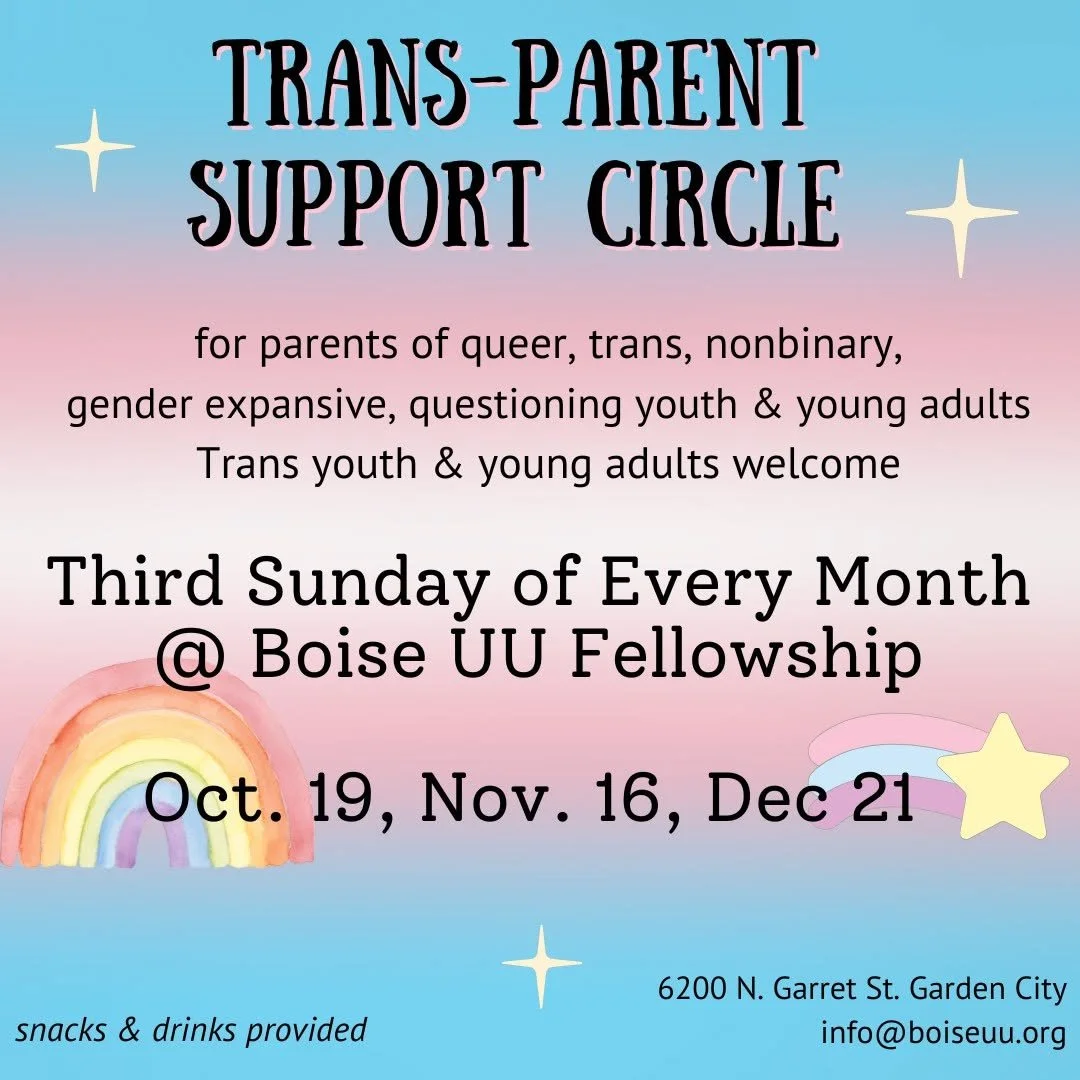
Boise Unitarian Universalist Fellowship
Website: https://boiseuu.org
Boise Unitarian Universalist Fellowship has offered a Parents of Trans Kids support group, creating opportunities for caregivers to connect, process their experiences, and support one another.
Contact the fellowship directly to confirm whether the group is currently meeting, who can participate, and how to join.
Support Groups for Parents


The Trevor Project
Website: https://www.thetrevorproject.org
The Trevor Project provides crisis support and mental health resources for LGBTQ+ young people, along with educational information for families and allies.
Its resources can help parents better understand the experiences of LGBTQ+ youth and ways to create affirming environments.
For immediate mental health crisis support in the United States, call or text 988.
A Final Message to Parents and Caregivers
Your child coming out as transgender doesn't mean you've lost the child you knew.
They're still the person you've watched grow, laughed with, cared for, and loved. They've simply trusted you with another part of who they are.
You may not understand everything immediately. You may make mistakes. You may need to unlearn assumptions or find answers to questions you've never considered before.
What matters is that you keep trying.
Listen to your child. Believe them when they tell you about themselves. Respect their privacy, their boundaries, and their identity. Make the effort to learn, and don't be afraid to seek support when you need it.
Most importantly, remind them through your words and actions that your love and respect aren't conditional on who they are.
Your child doesn't need you to have all the answers. They need to know that they can be themselves and still have you in their corner.
At Trans Affirm, we encourage families to continue learning, connecting, and becoming active allies in the lives of their transgender and gender diverse loved ones.
Because every child deserves to grow up knowing they are loved, respected, and supported for who they are.