Needle Anxiety and HRT: Making Shot Day a Little Easier

For many trans and gender diverse folks, starting HRT can be exciting, affirming, and something they have waited a long time for. But if your HRT involves injections, there may be one small problem: needles.
Needle anxiety is nothing to be embarrassed about. You can be excited about the changes HRT brings and still dread shot day. Even with years of experience giving yourself injections, you may still need to hype yourself up beforehand. Several members of the Trans Affirm team deal with needle anxiety too.
The goal does not have to be becoming completely comfortable with needles. Sometimes, it is simply finding ways to make the experience more manageable!
Distract Your Brain
Sometimes the anticipation is worse than the actual injection.
Giving your brain something else to focus on can help keep you from sitting there thinking about the needle. Try watching TikToks, putting on a comfort show, listening to music or a podcast, talking with someone, or focusing on something else you enjoy.

One trick from Trans Affirm Executive Director Arya is having his husband, Solano, help with his injection while Arya watches TikToks. Instead of sitting there waiting and anticipating exactly when the needle is coming, Arya focuses completely on his phone.
Solano, who knows how to safely administer Arya’s injection, waits until Arya is genuinely absorbed in a video, especially when he starts laughing or is clearly relaxed and feeling good. That’s usually his cue. He does the poke quickly and confidently using the injection technique they were taught, without giving Arya a countdown that would give his anxiety time to build again.
For Arya, the goal isn’t pretending the needle isn’t there. It’s keeping his brain focused on something enjoyable instead of spending those moments anticipating the poke.
If distraction helps you too, try finding something that really holds your attention rather than simply playing something in the background. A funny video, favorite show, conversation with someone you trust, game, or anything else that gets you genuinely engaged may make the anticipation easier to manage.
Your distraction does not have to look like anyone else's. Find something that actually holds your attention!
You Don't Have to Do It Alone
There is no rule saying HRT injections have to be a solo activity.
Having someone you trust nearby can give you someone to talk to, distract you, help you stay calm, or simply keep you company.
Some people also prefer having a trusted person administer their injection for them. If someone else is giving you your injection, they should be properly taught how to administer your medication safely according to your healthcare provider's instructions.
Needing help does not make your transition any less yours.
Set Yourself Up Before You Start
Having to search for something halfway through your routine can add stress when you are already anxious.
Before starting, choose a clean, well lit space and gather everything required for your prescribed injection. Depending on your instructions, that may include your medication, syringe and needles, alcohol swabs, gauze or a bandage, and an appropriate sharps container.
This also gives you a chance to make sure you have the correct medication and supplies before you begin.
If your medication is normally stored at room temperature, injecting medication that is at room temperature may be more comfortable than medication that is cold. Always follow the storage and handling instructions for your specific medication rather than heating or cooling it on your own.
Get Comfortable Before the Needle Comes Out
You do not need to rush through shot day.
Choose a comfortable position and try to relax the part of your body where you will be injecting. If needles sometimes make you dizzy or lightheaded, sitting or lying somewhere safe may also reduce your risk of being injured if you faint.
Give yourself a few minutes to settle in before starting. Put on your music, TikToks, podcast, or comfort show first instead of waiting until you are already anxious.
Slow Down Your Breathing, Not Your Safety
Anxiety can make your breathing faster without you realizing it.
Try taking slow, comfortable breaths into your belly. Some people also like structured breathing exercises, such as breathing in, pausing, breathing out, and pausing again for equal counts.
The goal is not to force yourself to become completely calm. It is simply to give your body something predictable to focus on while the anxiety passes.
If needles make you faint rather than simply anxious, relaxation techniques are not necessarily the best strategy. Needle related fainting can involve a sudden drop in blood pressure. A healthcare professional can teach you techniques such as applied muscle tension that are specifically intended for people who experience this response.
Reduce the Physical Sensation
Sometimes needle anxiety is partly about anticipating the poke.
Some people find that briefly cooling the skin with an ice pack or using an appropriate topical numbing product makes the sensation less intimidating. Other people prefer vibration or another sensory distraction near the area.
Be careful with this one. Excessive cold can numb the area more than intended or affect the skin, and topical numbing products have their own directions and precautions. Ask your clinician or pharmacist what is appropriate for your specific injection rather than assuming every method is safe for every medication!
Keeping the injection area relaxed and allowing alcohol used to clean the skin to dry completely before injecting may also make the injection more comfortable.
When It's Time for the Injection
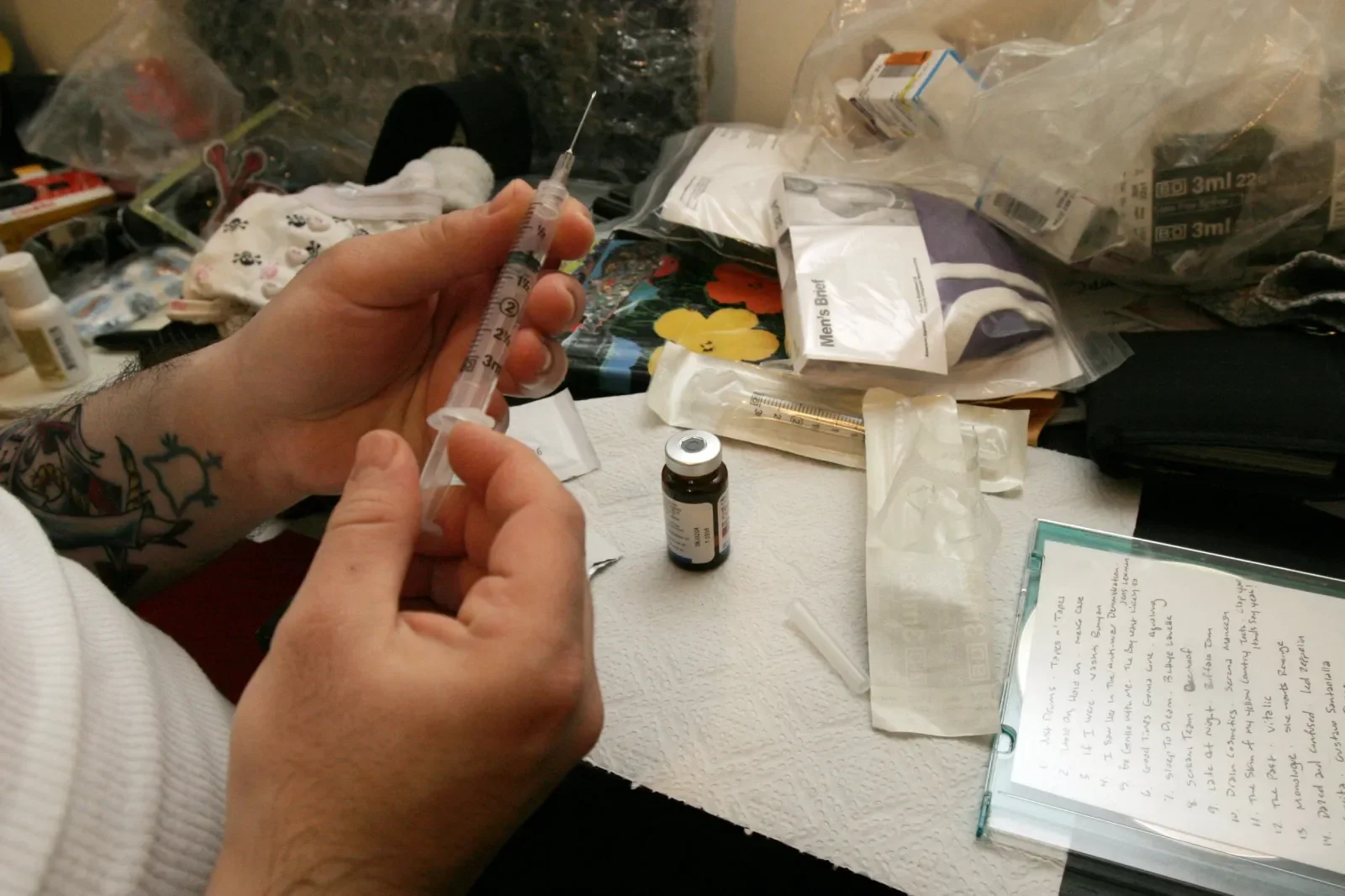
Anxiety can make you want to move extremely slowly through every part of an injection. Unfortunately, hesitating once the needle is entering the skin can sometimes make the experience more uncomfortable.
Poke with confidence. Follow the injection technique your healthcare professional taught you. Patient injection guidance generally recommends a smooth, deliberate insertion rather than slowly pushing the needle through the skin or moving it around unnecessarily.
If you find yourself repeatedly freezing at this point, that is something worth bringing up with your healthcare provider. They may be able to practice the process with you, supervise an injection, or help you find another approach.
Confidence does not mean pretending you are not scared. It can simply mean knowing the steps, preparing safely, and following the technique you were taught!
If Needles Make You Faint, Take It Seriously
Some people experience more than anxiety around needles. The sight, thought, or sensation of a needle can trigger a vasovagal response, causing blood pressure and sometimes heart rate to suddenly fall.
Warning signs can include feeling warm, nauseated, sweaty, dizzy, weak, lightheaded, or like your vision is narrowing.
If you feel like you might faint while holding a needle, stop. Put the needle down safely and sit or lie down somewhere you cannot fall. Do not try to rush through the injection before you pass out.
If you already know that needles make you faint, consider having another person with you and talk with your healthcare provider about ways to make injections safer.
Healthcare professionals sometimes teach applied tension to people whose needle fear causes fainting. This involves intentionally tensing large muscle groups to help counter the drop in blood pressure. It is different from relaxation techniques used primarily for panic, so ask a healthcare professional whether it is appropriate for you.
Repeated or unexplained fainting should be discussed with a healthcare professional. Seek urgent medical attention if fainting is accompanied by concerning symptoms such as chest pain, difficulty breathing, a significant injury, seizure like activity, or persistent confusion.
Ask About Subcutaneous Injections
If the size or length of the needle is contributing to your anxiety, ask your HRT provider whether a different injection route is appropriate for your prescription.
Intramuscular, or IM, injections deliver medication into muscle. Subcutaneous, or SubQ, injections deliver medication into the fatty tissue underneath the skin.
SubQ injections generally use shorter and smaller needles than IM injections, which some people find less intimidating.
However, your medication, prescription, and individual healthcare needs determine which routes are appropriate. Do not switch from IM to SubQ on your own!
Ask About Other HRT Options
Injections are not the only way some forms of HRT can be taken.
Depending on the medication and your healthcare needs, alternatives may include options such as testosterone gel or oral forms of estrogen. If needle anxiety is making it difficult to take your medication consistently, tell your provider and ask what alternatives may be appropriate for you.
You do not have to force yourself through one particular method because you think that is what HRT is supposed to look like.
Make Shot Day Yours
If shot day already brings anxiety, try making everything around the injection as low-stress as possible.
Give yourself enough time so you are not rushing. Choose a comfortable space. Put on your favorite show, playlist, or TikToks. Wear something comfy. Have a trusted person nearby if that helps. Practice whatever self care makes your body and brain feel a little safer.
And don't forget to reward yourself afterward! Get your favorite snack, order some food, play a game, take a warm shower, curl up with a comfort show, or just give yourself permission to relax.
Your reward doesn't have to be big. Sometimes having something positive waiting on the other side gives your brain something to focus on besides the needle.
Shot day doesn't have to become your favorite day. The goal is simply to make it as comfortable, predictable, and low stress as possible.
Be patient with yourself, celebrate getting through it, and build a routine that works for you.
**This article provides general education and community support, not individualized medical advice. Always follow the instructions for your specific prescription and talk with your prescribing healthcare professional or pharmacist before changing your medication, injection route, supplies, storage, preparation, or administration routine.